Seaworks volunteers come from all walks of life. The common element of the team is a mutual admiration and respect for preserving the significant history of the Williamstown, Melbourne and Victorian maritime precincts.

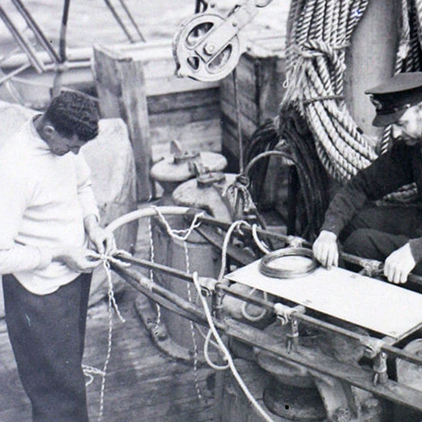
We have volunteers who have previously worked in the Williamstown dockyards, the Melbourne Harbour Trust, on boats and ships in various roles, or served in the Royal Australian Navy or Merchant Navy. Some volunteers simply want to give back to the community through service and enjoy meeting people and sharing a story or two. Many of our volunteers are retired, some are still engaged in work – but all are boating enthusiasts.

Volunteers participate in a range of roles including educating and engaging with visitors, restoring, repairing and preserving maritime memorabilia, artefacts and interactive models, organising and preparing exhibition pieces for display and conducting curatorial and research tasks as required.

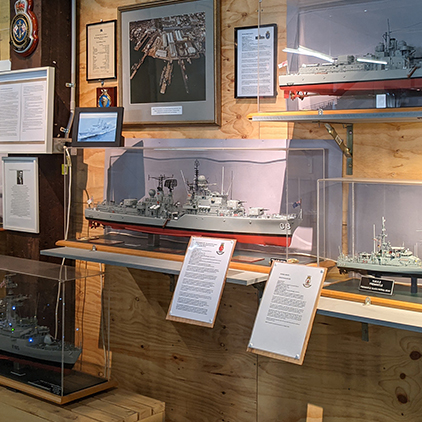
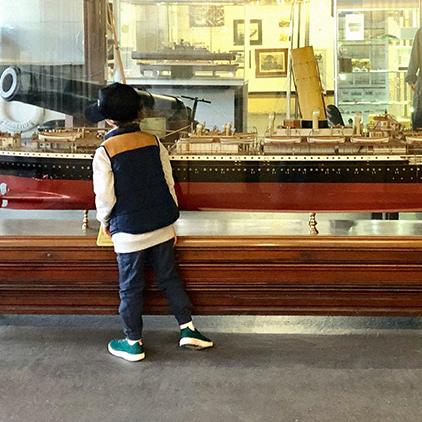
The museum holds important collections from the Melbourne Harbor Trust as well as from individuals, companies and affiliated associations.
Volunteer spotlight - Peter Taylor

Seaworks Museum volunteer Peter Taylor comes from a long line of family maritime involvement. Peter’s great great grandfather and great uncles were ship owners in Tasmania. His great great grandfather was a ship’s master as well. His grandfather was a ship’s carpenter and his uncle, Don Taylor, completed a shipwright apprenticeship with the Melbourne Harbour Trust in the 1950s at the site which is now called Seaworks.

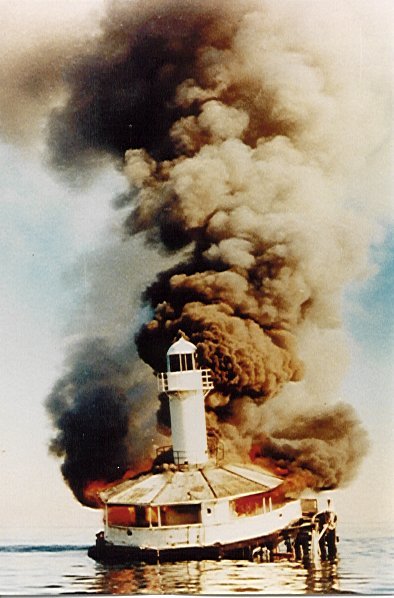
Peter’s great uncle, Merv Taylor, was lighthouse keeper on the Point Gellibrand Pile Light from the 1930s to 1950s. With that sort of pedigree, it is no wonder Peter had an affinity with maritime history. Trained as a stone mason, he became an avid scuba diver and accomplished author.

“I was always interested in the sea since I was a kid. My mum bought me a Jack Loney shipwrecks book when I was 13. I read it from cover to cover and started collecting shipwreck books,” he said.
“I found the wreck of a small wooden fishing boat off Port Arlington about 1971 or 1972 while snorkling. I took up scuba diving when I was 15 after being influenced by Lloyd Bridge’s Sea Hunt television series (produced from 1958 to 1961).

“My mate and I completed our scuba training at the City Baths in 1974. His brother was a scuba diver and we went out diving on his boat on weekends. From the mid 1970s, we started diving on wrecks off Anglesea and outside the Heads. In the early 1980s, we started looking for wrecks.”

While Peter was more interested in diving in his early years, he later became interested in writing maritime history. He learned to marry both passions, which helped him find shipwrecks.
In the 1990s, Peter became good friends with local maritime history legend, Bob Leek. He convinced Bob to publish his research so that it was not lost forever. Their first collaboration was Shipwrecks at Williamstown.

Over the years, Peter wrote for many publications. He carried out a lot of maritime history research at the National Archives and wrote chapters for some of its publications. During his research at the National Archives, Peter came across a record of the passenger ship and World War I troopship, the TSS Kanowna, which struck rocks off Wilsons Promontory and drifted south for a number of hours before sinking in February 1929. It had been lost for about 75 years until Peter discovered the file which identified the position where the ship sank. Drawing up a search grid, Peter and some diving colleagues used a magnetometer to find the wreck of the Kanowna about 50km off Wilsons Promontory in 83 metres of water in 2005. “It was too deep for me to dive but my friends dived it. It was pretty exciting,” he said.

Six years later, Peter was part of the team which found the wreck of the TSS Coramba 8km off Flinders. The Coramba left Warrnambool on November 29, 1934, laden with Nestle condensed milk and wool bound for Melbourne when it hit a huge storm and sank. Its master was Captain John Dowling, who lived on The Strand in Williamstown. It was one of Victoria’s worst marine tragedies with 17 people losing their lives.

Heritage

The Maritime Museum has an impressive collection of artifacts, models and bells to showcase the stories of maritime history of the Port of Melbourne.

View Heritage

Volunteer

Seaworks volunteers come from all walks of life. The common element of the team is a mutual admiration and respect for preserving the significant history of the Williamstown, Melbourne and Victorian maritime precincts.

View Volunteer

History

View History
Seaworks – WHERE BIG THINGS HAPPENSeaworks – WHERE BIG THINGS HAPPENSeaworks – WHERE BIG THINGS HAPPEN